

An Extraordinary Business Priced for Extraordinary Expectations
By Michael Hakes
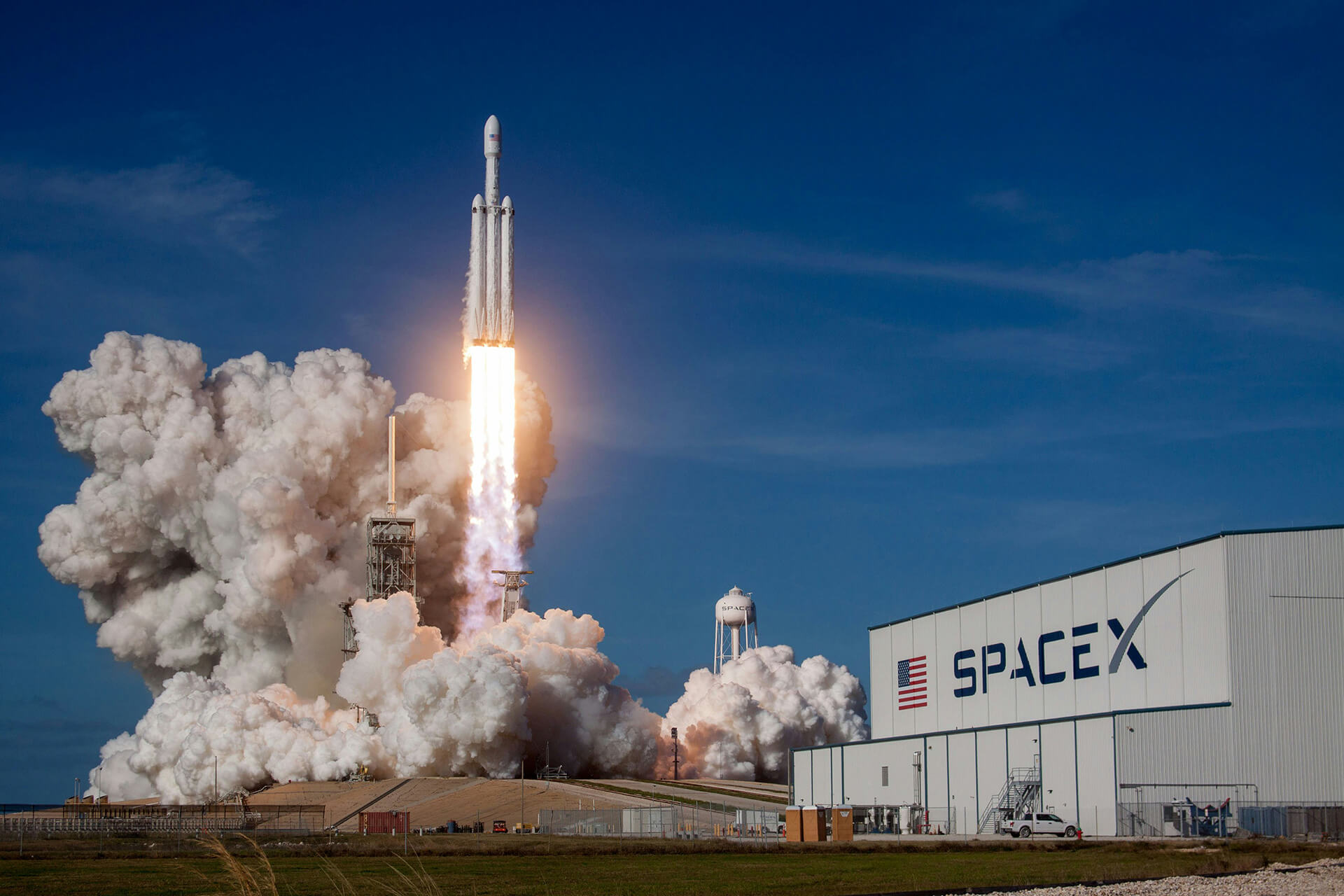
Few companies have captured the public imagination quite like SpaceX. In less than two decades, the company has transformed the economics of spaceflight, built the world’s largest satellite network and established itself as a critical piece of communications infrastructure across much of the globe.
It has done what many believed was impossible and, in the process, has become one of the most valuable private companies in history. Now investors are being offered the opportunity to participate.
On June 12, SpaceX is expected to begin trading on the Nasdaq under the ticker SPCX at a fixed price of $135 per share. At that price, the company would command an implied valuation of approximately $1.75 trillion, placing it among the largest public offerings ever completed.
The excitement is understandable. SpaceX is not simply another technology company. It sits at the intersection of aerospace, telecommunications, artificial intelligence and national infrastructure. It owns assets that would be extraordinarily difficult to replicate and has built competitive advantages that continue to widen.
However, the question for investors now is not whether SpaceX is an impressive company. It’s whether it’s an attractive investment at today’s valuation.
Our point of view is very straightforward. SpaceX is a genuinely exceptional business. Yet at $135 per share, investors are being asked to pay a price that assumes near-perfect execution across multiple business lines, several large acquisitions and an increasingly complex corporate structure. That creates a risk profile that deserves careful consideration.
THE BUSINESS IS STRONGER THAN EVER
The foundation of the SpaceX story remains its launch business.
The Falcon 9 rocket has become the workhorse of the global space industry, completing more than 620 successful missions with a reliability record that few industrial businesses can match. SpaceX has effectively become the primary gateway to space for Western governments, commercial operators and satellite providers.
That leadership position has helped support the rapid expansion of Starlink, the company’s satellite internet network. What began as an ambitious experiment has evolved into the dominant growth engine within the organization.
Starlink now serves approximately 10.3 million subscribers across more than 155 countries and markets and generated roughly $11.4 billion in revenue during 2025. That represents about 61% of the company’s total revenue and highlights how important the communications business has become to the overall investment thesis.

The challenge is that scale has not yet translated into profitability.
Despite generating $18.67 billion in revenue during 2025, SpaceX reported a net loss of approximately $4.94 billion. The company followed that with another quarterly loss of roughly $4.28 billion in the first quarter of 2026. Cumulative deficits have now surpassed $41 billion.
Those numbers do not invalidate the long-term opportunity. They do, however, highlight an important reality. Investors are purchasing a company that remains heavily dependent on future growth to justify its current valuation.
GROWTH IS BECOMING MORE COMPLICATED
For many years, the investment case for SpaceX was relatively easy to understand. The company launched rockets, expanded Starlink and reinvested aggressively to build future capacity.
That story has become considerably more complex.
Earlier this year, SpaceX completed its merger with xAI, Elon Musk’s artificial intelligence venture. The strategic rationale is compelling. Management envisions a future where space-based communications networks, orbital computing infrastructure and artificial intelligence converge into a single ecosystem.
The ambition is undeniable, but the financial implications are less clear.
The AI segment generated approximately $3.2 billion in revenue during 2025 while recording operating losses of roughly $6.4 billion. Capital expenditures tied to AI infrastructure reached approximately $12.7 billion during the year and continued at a rapid pace into 2026.
Investors must now evaluate a business that combines aerospace manufacturing, telecommunications infrastructure and one of the most capital-intensive AI expansion strategies in the market. That complexity increases execution risk.
THE BALANCE SHEET DESERVES ATTENTION
The valuation debate becomes even more challenging when examining the company’s capital structure. As of March 31, 2026, SpaceX reported approximately $29.1 billion in total debt. At the same time, the company carried an accumulated deficit of roughly $41.3 billion.

Part of that debt burden stems from transactions that extend beyond the company’s traditional aerospace and communications operations.
The balance sheet has become increasingly complex following the integration of xAI and commitments associated with future strategic acquisitions, including the proposed EchoStar transaction. Investors are now evaluating a business that combines launch services, satellite communications and artificial intelligence under a single corporate structure.
None of these initiatives are necessarily problematic in isolation. But together they create a capital structure that is significantly more complex than many investors may initially appreciate. The result is a company with extraordinary strategic assets, meaningful financial obligations and substantial capital requirements that are likely to persist for years.
VALUATION IS THE CENTRAL ISSUE
The strongest argument against purchasing SpaceX at the IPO price is not operational weakness. It is valuation.
At approximately $1.75 trillion, SpaceX is valued at roughly 94 times trailing revenue. That multiple is extraordinary by almost any historical measure. For context, Nvidia, one of the world’s most highly valued technology companies, trades at roughly 24 times sales. Investors purchasing SpaceX today are being asked to pay nearly four times that premium.
The market is effectively assigning significant future value to businesses that have not yet fully matured, including AI infrastructure initiatives, direct-to-device communications services and next-generation launch systems. Some of those opportunities may ultimately justify today’s valuation, but many may not. The challenge is that current buyers are paying for outcomes that have not yet been delivered.
GOVERNANCE MATTERS
Investors should also understand the governance structure accompanying the offering. Following the IPO, Elon Musk is expected to retain more than 82% of the company’s voting control through a dual-class share structure, giving him effective control over major corporate decisions.

For some investors, that may not be a concern. Musk’s leadership has unquestionably created enormous value across multiple businesses. Others may view concentrated control as an additional risk factor, particularly given the increasingly diverse collection of businesses now operating under the broader SpaceX umbrella. Either way, it is an important consideration when assessing long-term ownership.
OUR VIEW
There is little debate about the quality of the underlying business. SpaceX has reshaped the economics of space access, created a global communications platform and established technological leadership in industries that will likely remain important for decades.
The investment question is different. At today’s valuation, investors are being asked to assume that Starlink continues its rapid expansion, AI investments generate attractive returns, major acquisitions integrate successfully and profitability eventually catches up with growth.
That is possible. It is also already reflected in the price. For that reason, we are not inclined to chase the IPO. We will continue monitoring operational performance, capital allocation decisions and valuation trends as the public market story develops.
SpaceX may ultimately become one of the defining companies of this generation. That does not automatically make it a compelling investment on day one. As investors, our responsibility is not to buy great companies at any price. It is to identify situations where the relationship between risk and reward works in our favour.
For now, we believe patience remains the more attractive position.
THE BOTTOM LINE
The SpaceX IPO is a landmark moment in global finance. It represents the continued convergence of technology, communications infrastructure and artificial intelligence at a scale rarely seen in public markets.
There is no question that SpaceX has built one of the most important industrial platforms of the modern era. The company has demonstrated an ability to innovate, execute and challenge conventional thinking in ways that few organizations have achieved. Yet great companies do not always make great investments.
At its proposed valuation, investors are being asked to underwrite a future that assumes exceptional execution across multiple businesses while overlooking meaningful financial and governance risks. That may ultimately prove justified, but it may also leave little room for disappointment.
Our role is not to follow market enthusiasm. It is to assess risk, preserve capital and identify opportunities where long-term returns are aligned with underlying fundamentals. SpaceX is a remarkable company. Whether it is a remarkable investment at $135 per share remains a much more difficult question.


